Andrew Murray Robertson
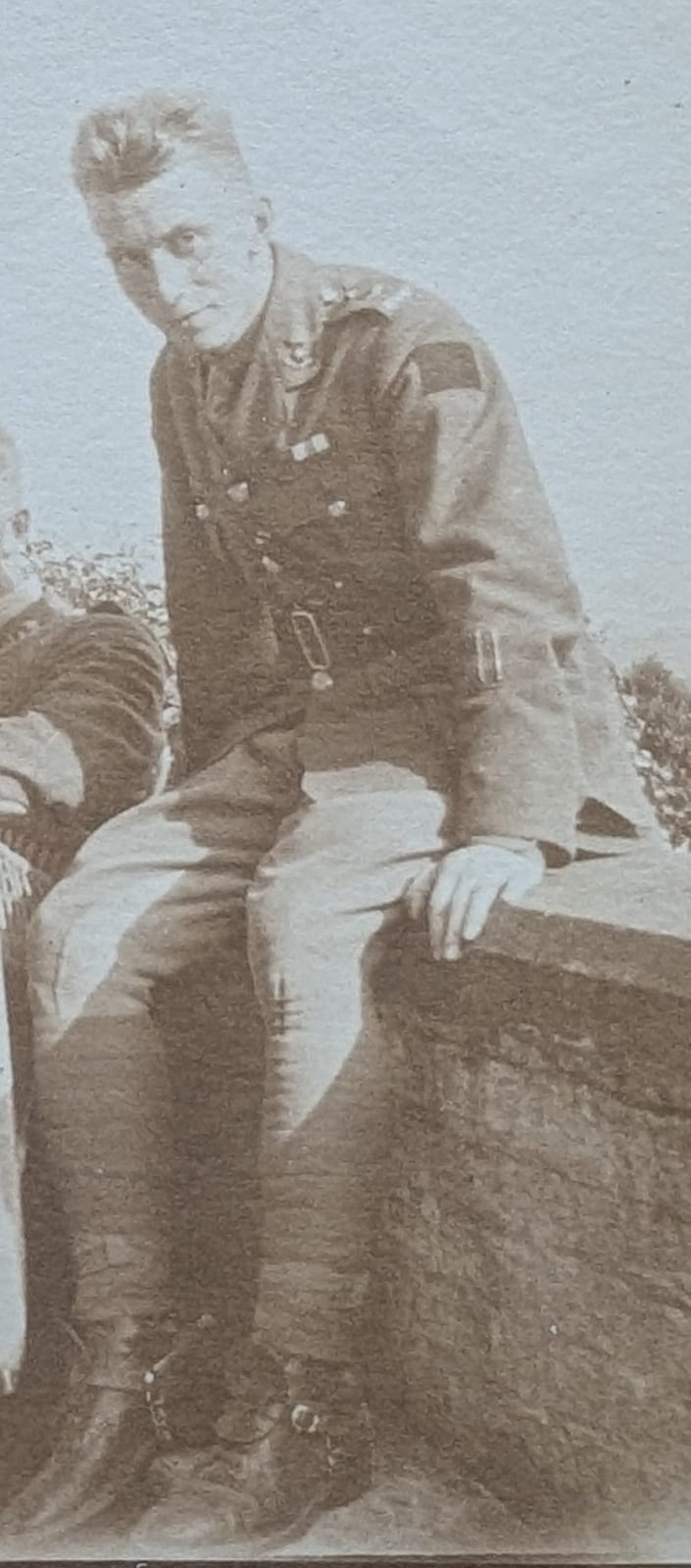
Murray was born July 18, 1894, in Keewatin, Ontario. He was educated at Montreal High School and was an original member of McGill University's Canadian Officers' Training Corps before leaving his studies in 1915 to enlist as a gunner in the 21st Battery, C.F.A.
He enlisted February 16, 1915, and left Montreal the following day. He trained in England, was commissioned into the Canadian Engineers from the ranks in August 1915, and crossed to France on January 3, 1916, to serve with the 3rd Field Company. He was wounded three times in action, including July 1916 and again in February 1917, and was awarded the Military Cross, announced in the London Gazette's New Year Honours of January 1917. "Well here I am a bloomin' M.C. and lord only knows what for," he wrote when he heard. By 1918 he held the rank of Temporary Captain, commanding his division's bridging unit (mostly pontoons, which he called "the fleet").
Throughout the war he corresponded regularly with his cousin Doris Robertson in California; those letters, alongside his daily diary, form the two collections preserved on this site.
His own diary's day-to-day record ends December 2, 1918, in a hospital ward in Belgium, recovering from influenza just after the Armistice. His official Record of Service picks up the story from there: posted that February to attend Khaki University, an education program set up for Canadian soldiers awaiting repatriation, and sailing for Canada on September 20, 1919. Murray returned to Montreal and completed a civil engineering degree at McGill in 1921, where he wrote a retrospective paper on the organization of the Canadian Engineers, preserved with a 1923 letter of corrections from a fellow officer. He spent his career at the Bell Telephone Company of Canada, eventually becoming district traffic superintendent across Montreal, Ottawa, and Quebec, and retired in 1960. He returned to military service in 1940, during the Second World War, with the rank of Major. He died in 1971, survived by his widow, Mildred, two daughters, and three grandchildren.
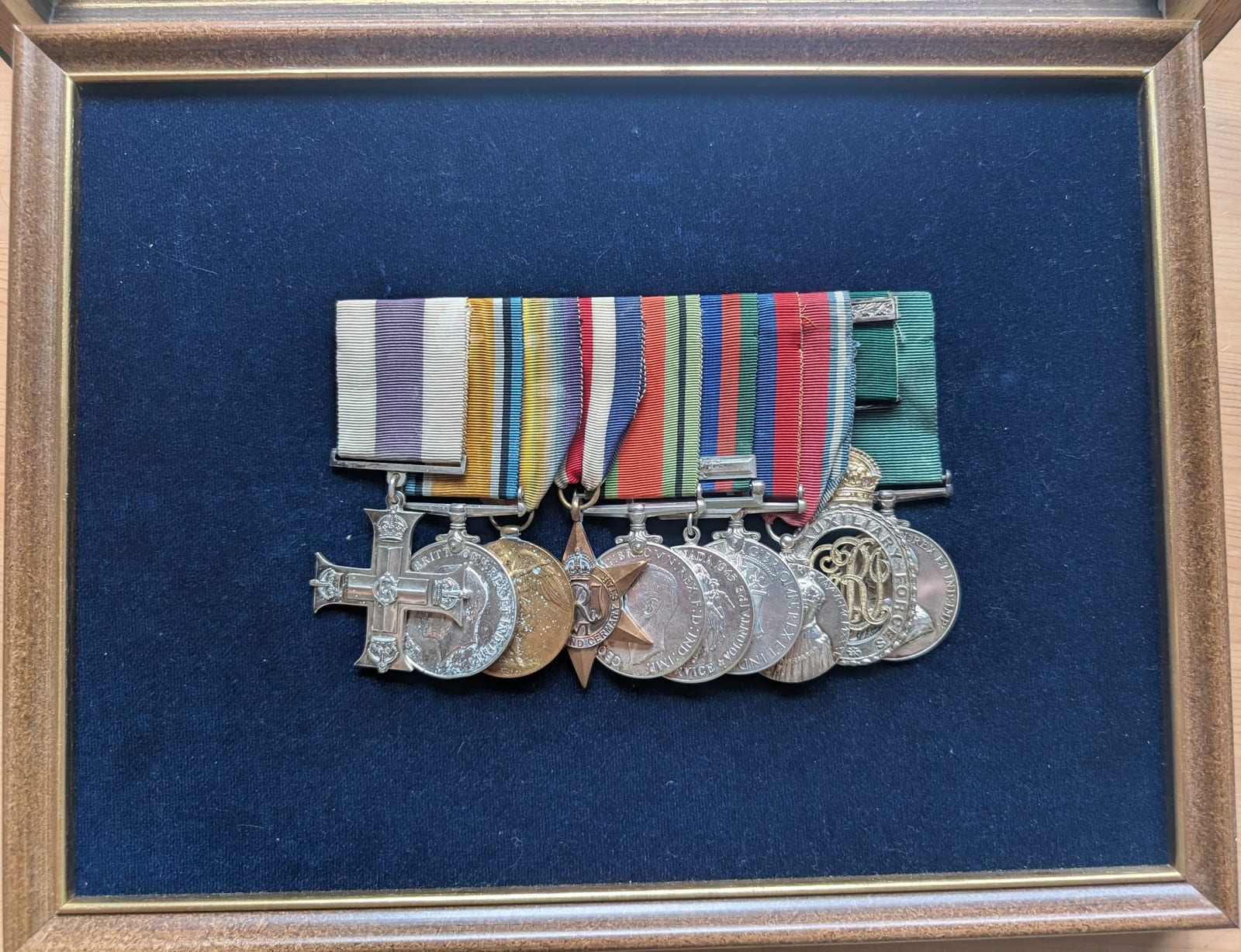
Ten medals spanning both world wars. See the Gallery for the full set, identified.
Curious about the site itself? See About This Site.